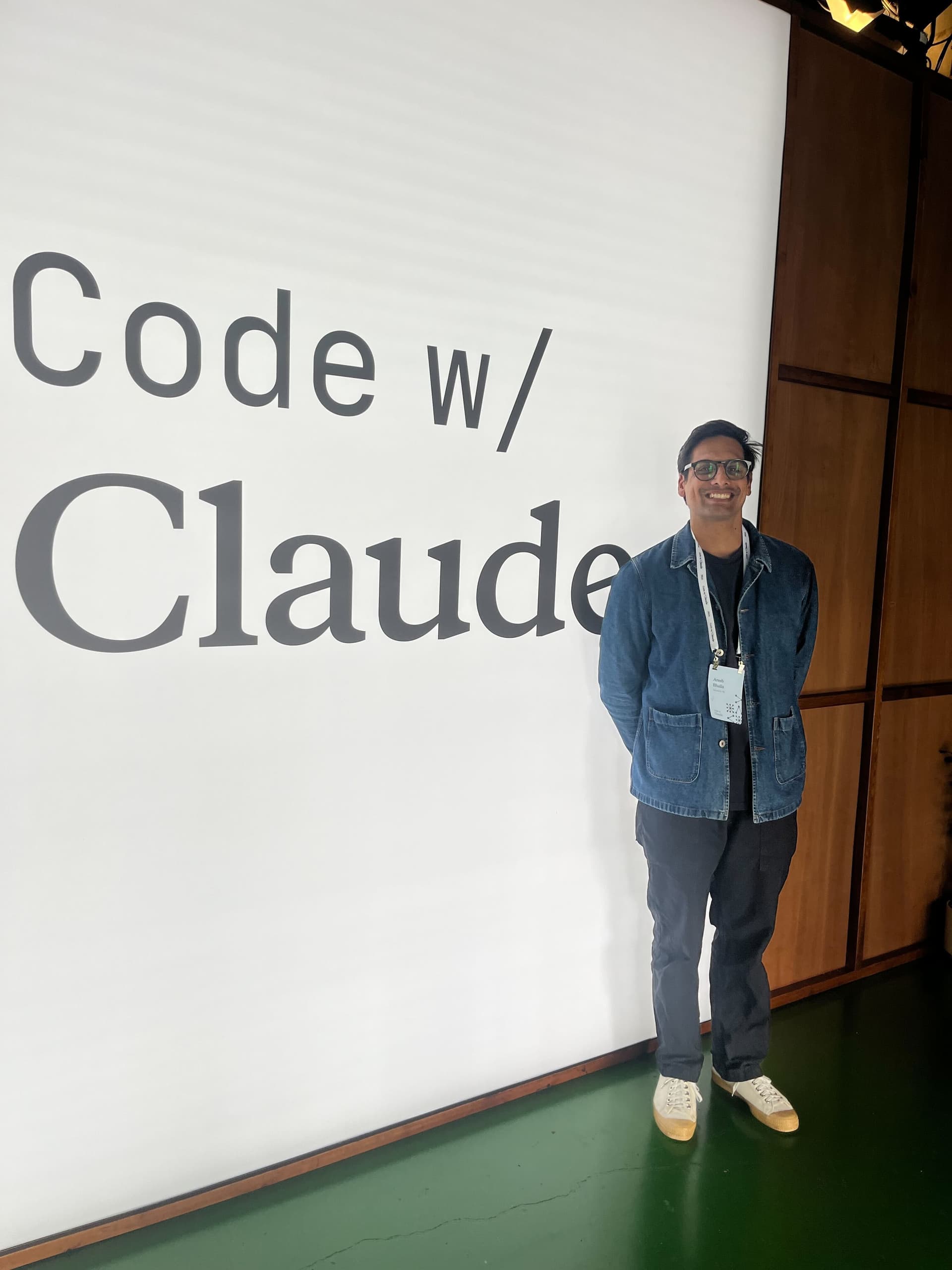
Canada Water tube station is not, by any measure, a place that prepares you for an encounter with the future. It is in Zone 2, surrounded by a Decathlon, and it smells of the rising damp from the man-made lake built out of the former docks. Yet this morning it disgorged a remarkable thing: a steady stream of middle-aged men in backpacks, blinking into the daylight and converging on a warehouse venue with the quiet, purposeful urgency of bats leaving a cave at dusk.
From the moment you passed security, on-demand scanning and printed lanyards, it was clear that serious money had been spent. This was not your regular Luma meet-up with a Tesco order of kettle crisps and BrewDog IPAs. The venue had been reimagined entirely for the occasion. Walls painted green, floor-to-ceiling shelves loaded with Penguin classics and artful knick-knacks, linen-clad helpers steering you toward artisanal pastries and barista coffee. It had the feel of a Norwegian country cottage put together by a very well-funded Shoreditch agency. Pride and Prejudice on the shelves, pain au chocolat on the counters, and a self-typing typewriter wired to Claude.
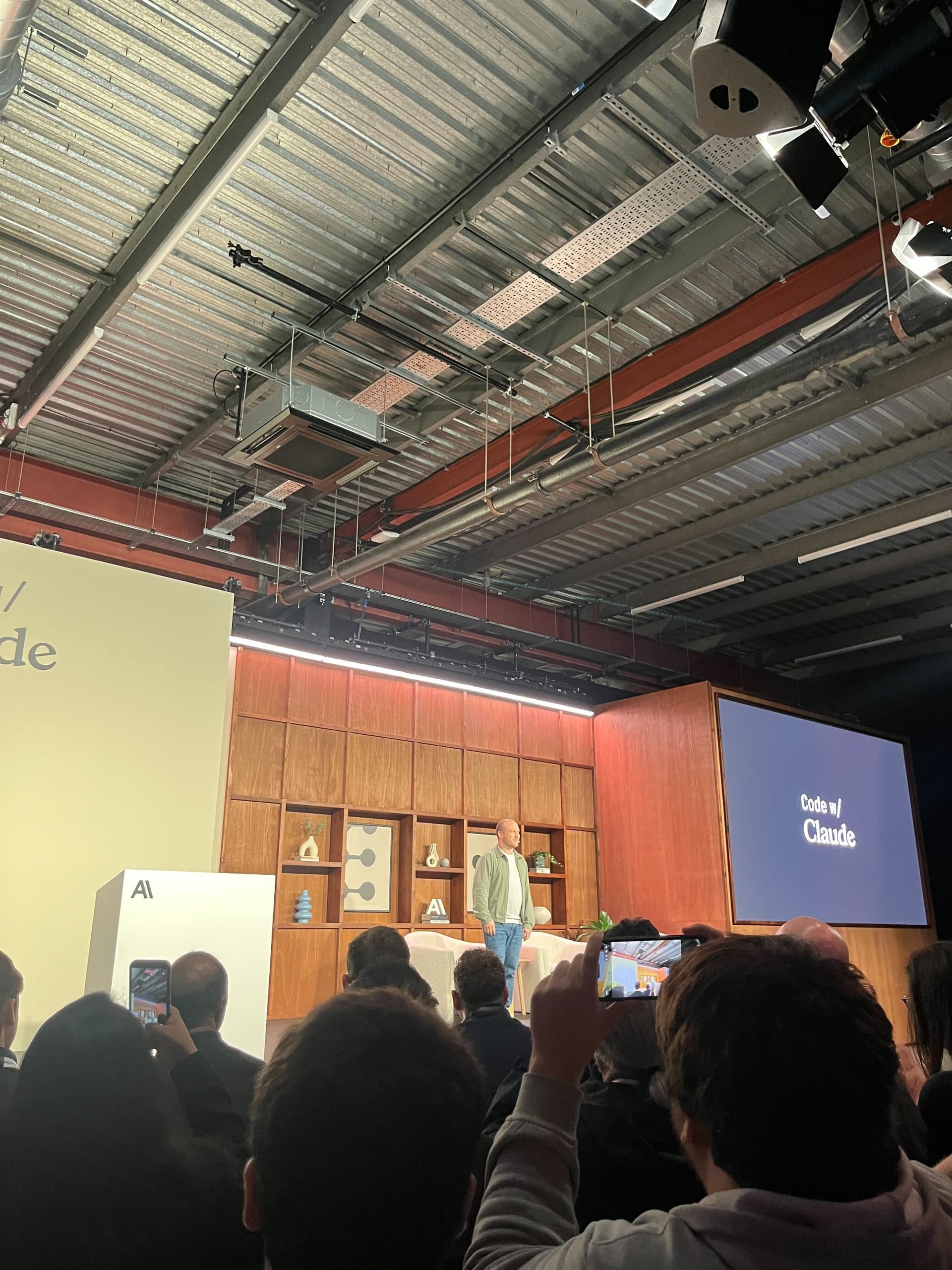
Each room was filled with a sea of open laptops staring into terminals, which gave the whole thing a very Black Mirror quality. Boris Cherny occupied the space the way a prophet occupies a new religion, slightly ethereal, evangelical, with everyone paying homage to the benevolent god, Claude.
What stood out
A few takeaways that I think are worth sharing:
- Anthropic is moving internal docs from Markdown to HTML. As
.mdfiles get larger and bulkier, HTML provides a richer format, more human-consumable, better for graphical display of technical information. - Code review is the bottleneck nobody has solved. Everyone I spoke to, including the Applied AI team who talk to lots of customers, said engineers are context-switching constantly and finding review taxing. No real answers yet. Just automated reviews to weed out glaring errors and make the load bearable. There is also the small issue of mandatory peer reviews for SOC 2 that means we have just moved the bottle neck.
- Skills management has the same shape of problem. Marketplace skills
duplicate repo-level skills. The pragmatic answer is hierarchical
CLAUDE.mdfiles that explicitly call out the essential skills for each repo or workflow. Optimise for speed of use first; worry about duplication and drift later. - One Claude Code engineer in office hours said he prefers Claude on the web to local worktrees. It takes a bit of set-up, but he can work remotely. Invaluable when he's on call and away from his laptop.
How Anthropic is using Claude internally
- Interview-driven brainstorms, aided by skills with ask user flow.
- HTML mock-ups to walk through decisions for both full-stack features and technical-only work.
- Built-in verification inside the process. They showed a verifiable component architecture with a machine-readable DOM contract that an agent or CI can observe at runtime.
- An SRE agent that can access telemetry, logs and alerts to triage issues.
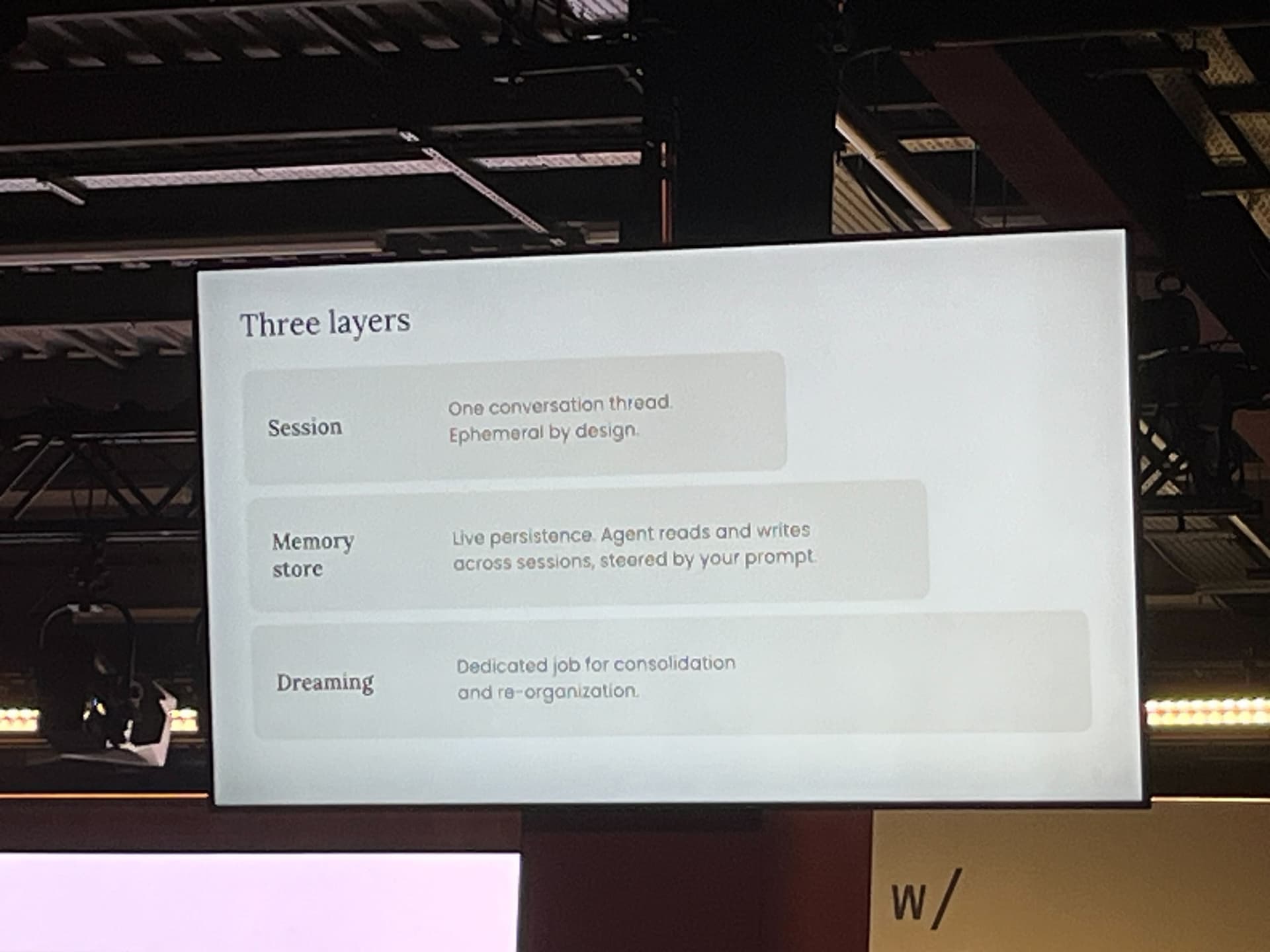
- A memory store built on the Agent SDK, with a "dreaming" service that consolidates past transcripts into a searchable knowledge base. Would be hugely useful to feed CRM and customer feedback to create custom customer context that is usefult to GTM and technical teams.
For long-running agents, the team is still figuring out how to keep them on their original goal. Things they're using today:
- Hooks that use the app itself, or rely on screenshots, to see what's been built.
- A note-taking system to keep track of to-dos during long-running tasks.
- Hooks for security and compliance.
- A reviewing agent.
- Hooks to check the latest changes from teammates via git.
All hooked up to a dashboard visualising all of these hooks while the agent worked through a task.
Two talks worth your time
Kevin Collins (echofold.ai / fractium.ai) on running two companies with Claude. The thing I took away: a GitHub knowledge repository that all teams write into, covering competitor analysis, customers, sales playbooks, product roadmap, marketing, hiring. This becomes the brain of the company, plugged into the sensory layer (email, Slack, Notion) to keep it updated, and the place every team pulls from to support whatever they're working on. He's tried Obsidian, but found a GitHub repo cleaner for auditability and for undoing any garbage that gets added. This is not novel and the key is more realigning teams to this workflow and bring off-git teams on to a git workflow.
James Brady (Head of Eng at Elicit) on making agents trustworthy and verifiable. What they've built is fairly over the top. However, you can see the exact codified stream that an agent ran. But it's worth looking at as an example of glass-box AI: discoverable, interruptible, and verifiable to a user. (elicit.com/blog/auto-evaluation)
Links
- Workshop materials: github.com/anthropics/cwc-workshops
- Recorded talks from the SF edition: claude.com/code-with-claude/san-francisco
- Anthropic on harness design for long-running apps: anthropic.com/engineering/harness-design-long-running-apps
- The quality loop for long-running agents: github.com/anthropics/cwc-long-running-agents#the-quality-loop